

Moving Targets
The “missing” impact of immigration



This post is the second installment in a series on immigration (see part I), written in collaboration with Arctotherium. I am deeply grateful for his support and assistance throughout this project; it has been a genuine pleasure working with him.
This series does not emerge in a vacuum. Over the past several years, a growing number of writers—many working outside traditional institutions—have undertaken the difficult work of challenging and dismantling the dominant dogmas surrounding immigration. Much of that work has been scattered across essays, blog posts, and independent research.
What follows is an attempt to synthesize that intellectual current. Our goal is to gather, organize, and extend some of the strongest arguments developed across this broader ecosystem into a single, coherent framework. If successful, this series will serve as a durable reference point for anyone seeking a serious, evidence-based case for immigration restrictionism—both today and in the years ahead.
With that said, let’s begin.
Much of the empirical literature on immigration economics begins with a puzzle. Large inflows of foreign labor, often concentrated in specific regions and industries, appear to produce only modest and sometimes statistically insignificant effects on native wages. The conclusion often drawn from this is that labor markets are flexible, adjustment is seamless, and the employment consequences of immigration are, at worst, negligible. But this rests on the assumption that the adjustments occur within the places being measured. If wages in a given city do not fall, the reasoning goes, then the labor market has absorbed the shock and no meaningful harm has occurred. The problem is that the dominant models used in this literature rest on an incomplete account of how labor markets actually adjust. Even if immigrants imposed large negative effects on the economic prospects of native workers,1 the methodological choices employed would systematically wash those effects out, for a very simple reason: they ignore the role of internal migration.
CONTENTS
Foreigners In, Natives Out
For most of modern economic history, internal migration served as a powerful equalizing force. Workers moved from low-productivity regions to high-productivity ones, reallocating labor toward areas where it was most valued.2 This process underpinned both wage convergence and upward mobility. People left stagnant regions because opportunity lay elsewhere. In recent decades, however, this mechanism has weakened, and in some countries, reversed outright:

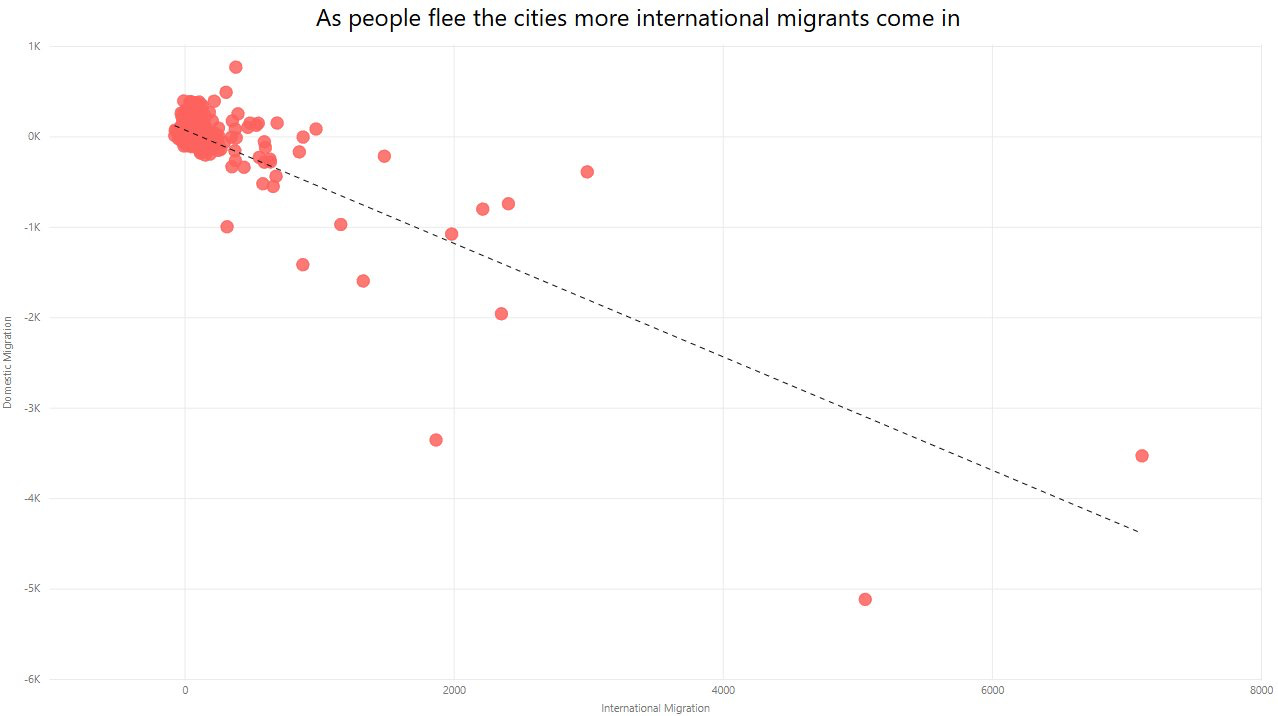
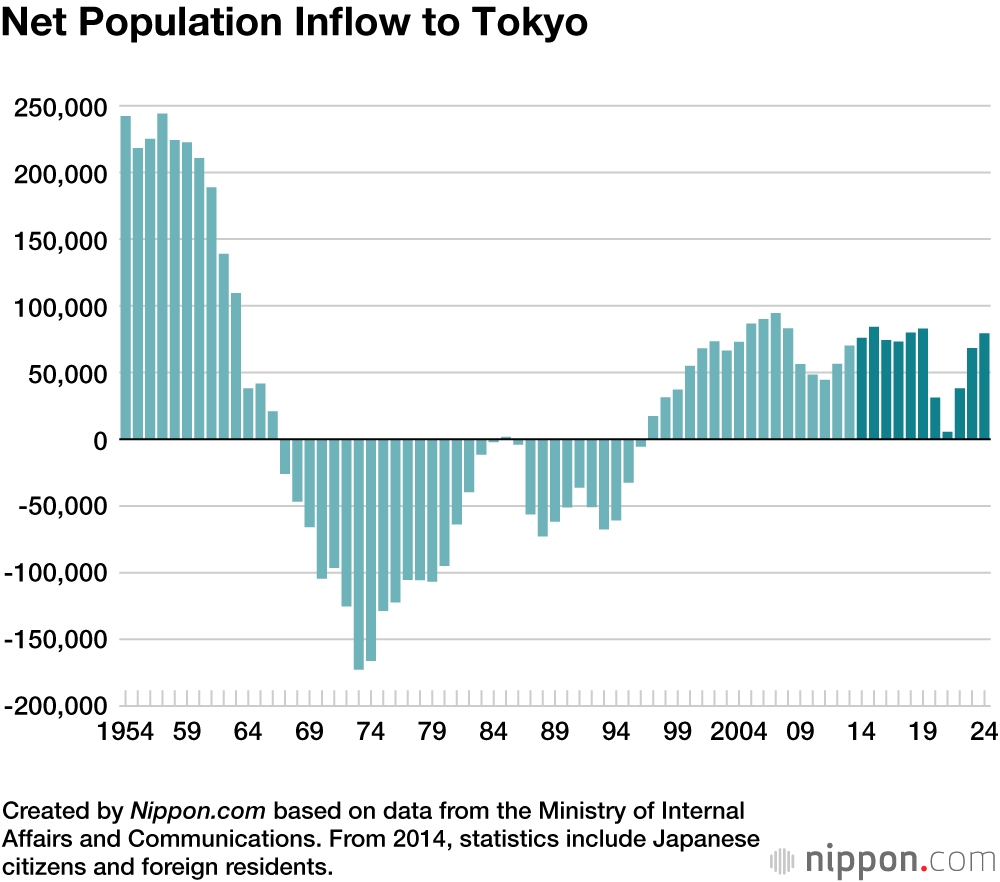
Countries such as Italy and Japan still exhibit the traditional flow of labor toward high-productivity regions. But across much of the Western world, people are moving away from economic centers. Instead of moving to where their skills are at a premium, citizens of these countries flee them in droves.3
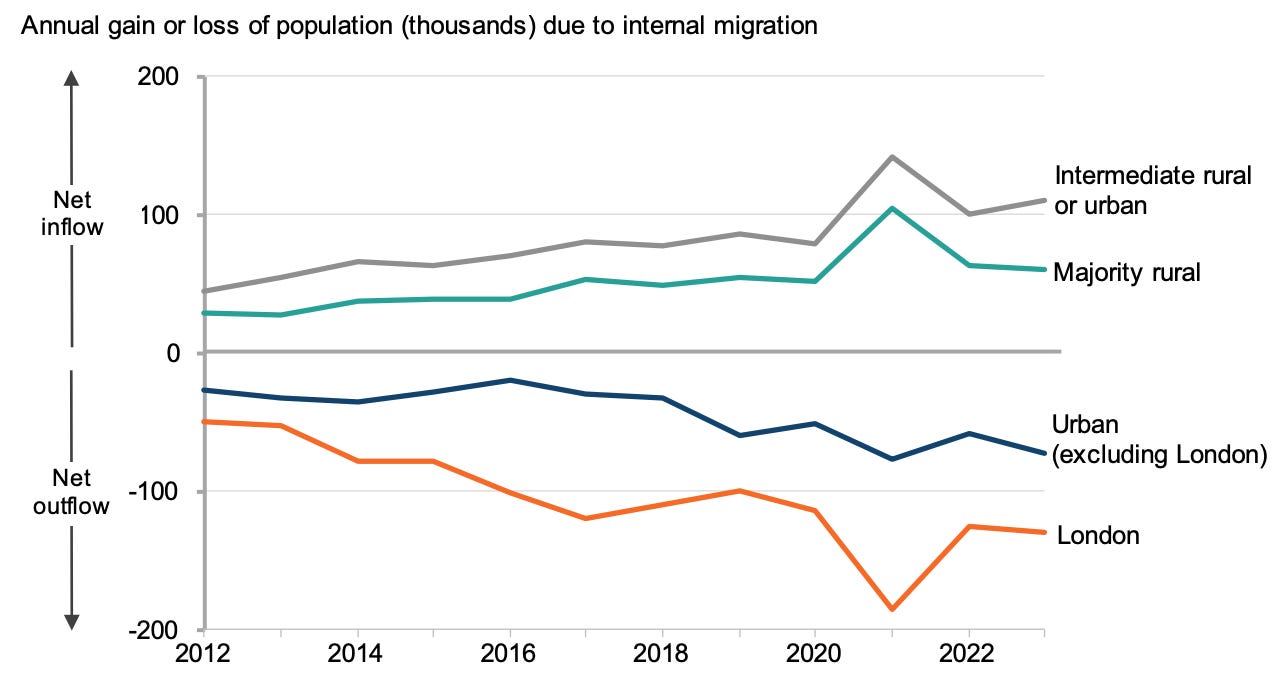
At first glance, this is baffling, like watching water flow up a hill. But a look at the list of anomalous countries suggests an explanation: Third World immigration.
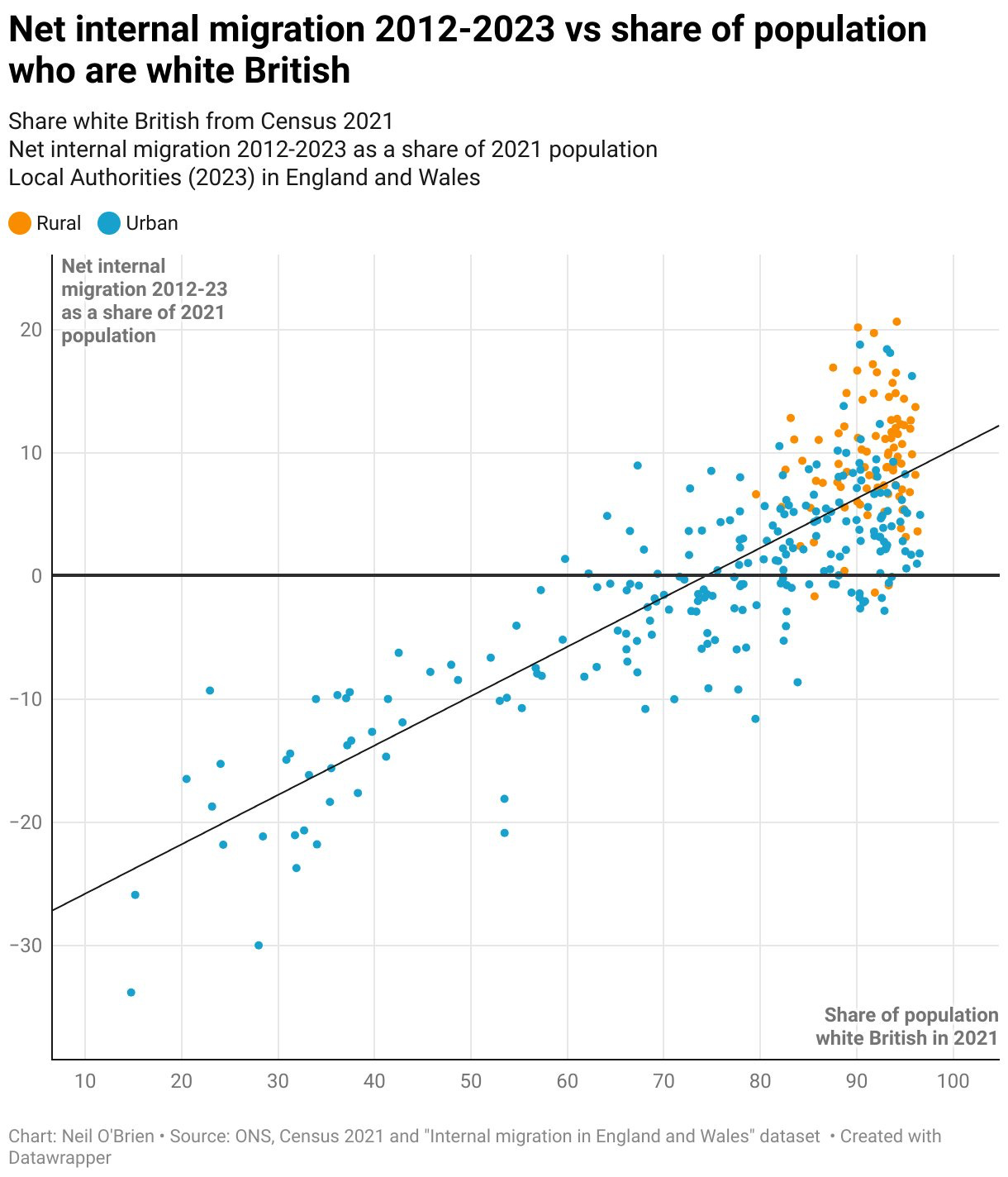
Immigrants do not disperse randomly across space. They concentrate in areas of economic opportunity, especially so if preexisting ethnic networks are already present to help facilitate the settlement, which usually means major metropolitan centers. As immigrants disproportionately settle in high-employment areas, they absorb a substantial share of local labor demand. This reduces the expected returns for natives who might otherwise move into these regions, lowering internal inflows. Consider the evidence from the United States:
I estimate that new immigrants account for 40% of local population adjustment since 1960. This vastly exceeds their share of gross migratory flows (just 10%). I attribute their “excess” response to the pull of migrant enclaves, which are disproportionately located in high-employment areas (a consequence of persistent shocks). However, immigration does not significantly accelerate population adjustment overall, as it crowds out the contribution from internal mobility. This crowd-out can help explain the contemporary decline in gross internal flows (Amior, 2023).
This applies to both skilled and unskilled labor, and the effect is large enough to explain the oft-remarked upon decline in internal mobility within the United States:

Nor is this phenomenon unique to the United States. To see this effect more clearly, it helps to look at mobility directly and across generations in a different country. Intergenerational mobility is the extent to which a person’s economic outcome depends on their parents’ position. A Norwegian study measured this using what the authors call the “social gradient”, which is the relationship between parental income rank and a child’s adult earnings rank. The steeper this relationship, the more strongly class background determines outcomes, and the lower mobility is.
Using detailed Norwegian administrative data, they assigned individuals to parental income quintiles and then tracked their earnings rank in adulthood. They then examined how exposure to immigration changes the slope of this relationship. The result is damning: low-income immigration steepens the gradient for low-income families.4 In areas with more immigration, children from poorer families fall further behind. In the authors’ own words:
Taken at face value, our estimation results imply that the observed 10% point increase in the low-income-country immigrant population share between 1992 and 2012, together with the 1 percentage point increase in the high-income-country immigration share, explains a 2.3 percentile drop in the average earnings rank outcome for the bottom class quintile for the cohorts examined in this paper (born 1960–1980), roughly corresponding to the observed decline. Hence, according to this measure, immigration patterns can explain the entire observed drop in economic mobility for the bottom class quintile (Hoen et al., 2022, p. 1617).
At the same time, increased competition and rising costs induce some existing natives to leave. This is true whether examined at the neighborhood, city, or provincial level. The net effect is a substitution of internal migration with foreign inflows. This dynamic also explains a long-standing puzzle in the immigration literature: why measured wage effects appear so small. When immigrants arrive, they do not simply add to local labor supply. Some native competitors exit, reducing supply contemporaneously, while others never arrive in the first place, reducing future supply in a way that is harder to observe. Wage suppression is therefore partially masked by native displacement.
Case Study: The Mariel Boatlift
The famous Mariel Boatlift—the influx of Cuban refugees to Miami in the 1980s—is an oft-cited case study by pro-immigration advocates as evidence that immigration doesn’t hurt native wages. But in reality, it is yet another example where native outflows hid the wage impact, giving the false appearance of neutrality.
Economist David Card’s initial analysis of the economic impact of the event purported to show no negative effects on native wages (Card, 1990). By contrast, Borjas (2017) re-analyzed the same data and found that the influx of migrants during this event caused a wage shock to native high school dropouts, reducing their wages by somewhere between 10–30%. As expected, this finding did not come without pushback.
One criticism levied against Borjas was that the March CPS dataset he used captured the growing share of American blacks during this time period, and that the wage depression he found was really just an artifact caused by changes in racial composition (Clemens & Hunt, 2019). Borjas has already responded to this, demonstrating that the change in the racial composition in the March CPS does not coincide with the wage decline, and finding that the wage depression effect continues to hold after making adjustments for racial composition (Borjas, 2019).
Yet another criticism levied against Borjas comes from Peri & Yasenov (2019), who argued that Borjas’s findings are a result of measurement error from using too small and narrow of a sample of non-Hispanic high school dropouts. Peri & Yasenov’s analysis had a much larger sample and included far more subgroups as they chose to look more broadly at non-Cubans. They also utilized the synthetic control method, finding no effect.
Peri & Yasenov’s method might be more precise, but is it more accurate? Doubtful, since in this case it was likely an inappropriate use of synthetic control, as Monras (2021) noted in their fourth footnote:
As argued in Abadie (2020), synthetic control groups work best when the preshock period is long and the pool of donors is large. In this case, the options are a preperiod length that spans 1973–79, with a pool of donors of 33 metropolitan areas, and a preshock period of 1976–79, with a pool of donors of 43 metropolitan areas. Moreover, the number of observations in many of these metropolitan areas is small, and, hence, preshock variables are measured with error, which further complicates the use of synthetic control methods in this episode.
Additionally, using synthetic control in the case of Mariel means that the control cities must be as close of a match to the situation of Miami in every way possible except, obviously, when it comes to immigration. Political scientist Steve Sailer pointed out, however, that this doesn’t hold true for Miami during the 1980s, as there was a massive cocaine boom around the same time the boatlift had occurred which might have masked the immigration wage shock.
But by far the greatest issue was the internal migration of natives. As can be seen below, accounting for internal migration clearly shows that the effect of the Miami refugees on native wages was indeed negative:
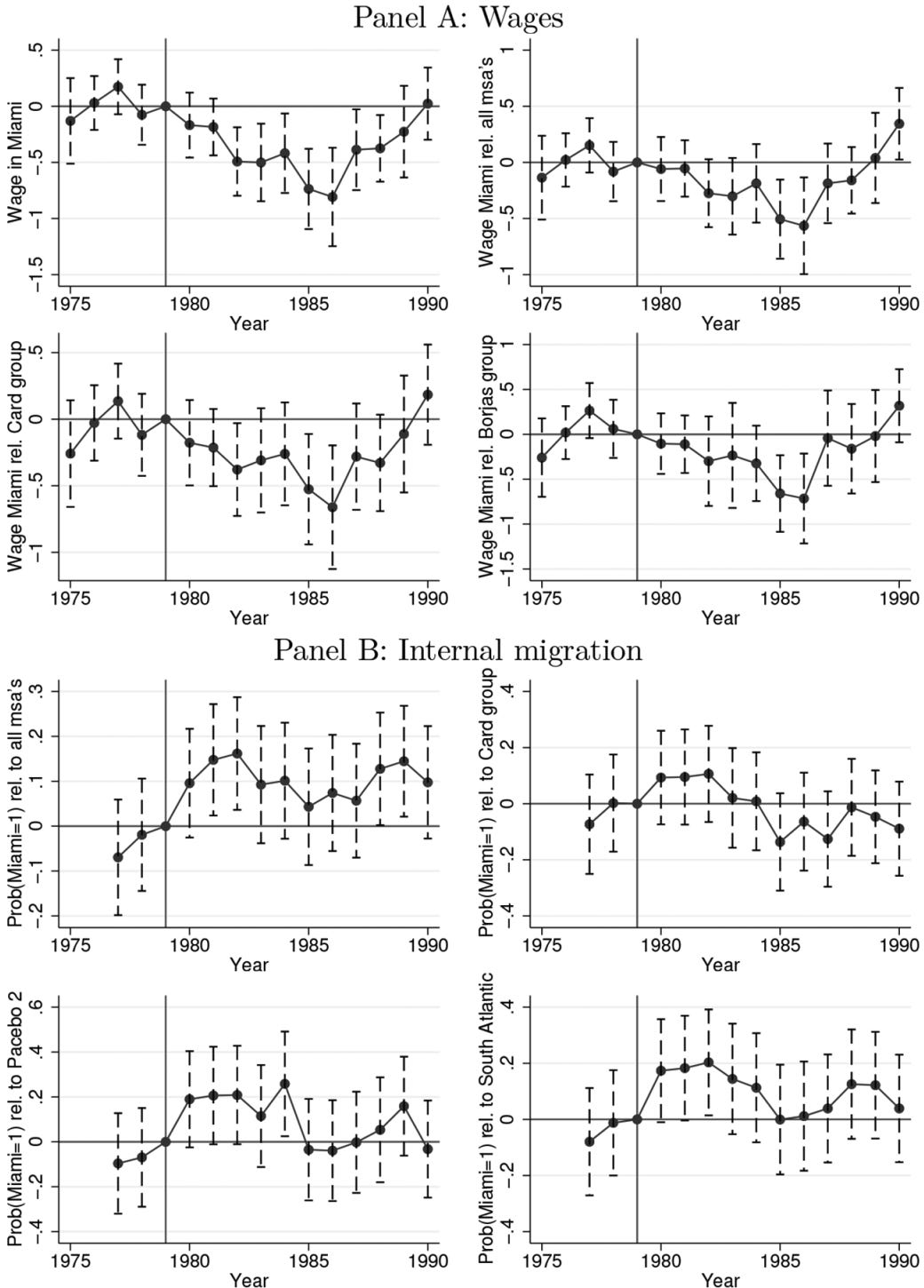

In the author’s own words, “This estimate implies that an increase in a metropolitan area–skill cell equivalent to 10% of the native workforce in that cell reduces wages by around 10% on impact” (Monras, 2021, p. 223).
This stands in stark contrast to David Card’s own findings that immigration does not cause substantial native outflows (Card & DiNardo, 2000). The reason for these differences in findings is because Card & DiNardo used the ‘immigrants-networks instruments’ measurement technique, which is known to find very small effects on native wages and employment rates, because, as Monras explains, “internal migration responses to local shocks is related to two facts. On the one hand, immigrant shocks tend to occur in expensive locations, where, as we show, it is easy for natives to respond by relocating. On the other hand, the immigrant-networks instrument tends to give weight to small metropolitan areas close to the Mexican border, thereby resulting in lower internal mobility estimates than when other identification strategies are used” (Monras, 2021, p. 208). Using his proposed open city spatial equilibrium model, Monras finds that “around 50% of the wage recovery over the 1980s in Miami, relative to a number of potential control locations, is explained by internal migration, with the rest explained by other factors, such as technology adoption” (p. 233).5
Similar patterns emerge elsewhere. Dustmann et al. (2016) show that in Germany, “low-wage workers [were] more likely to leave or not enter the workforce in response to [Czech] immigration” (p. 30).
If immigration really does repel natives from high-opportunity regions, then removing that pressure should restore traditional migration patterns. The United States offers a natural experiment. World War I, followed by the immigration restrictions imposed in the 1920s, and coupled with high rates of remigration, caused the foreign-born share of the population to collapse for several decades.
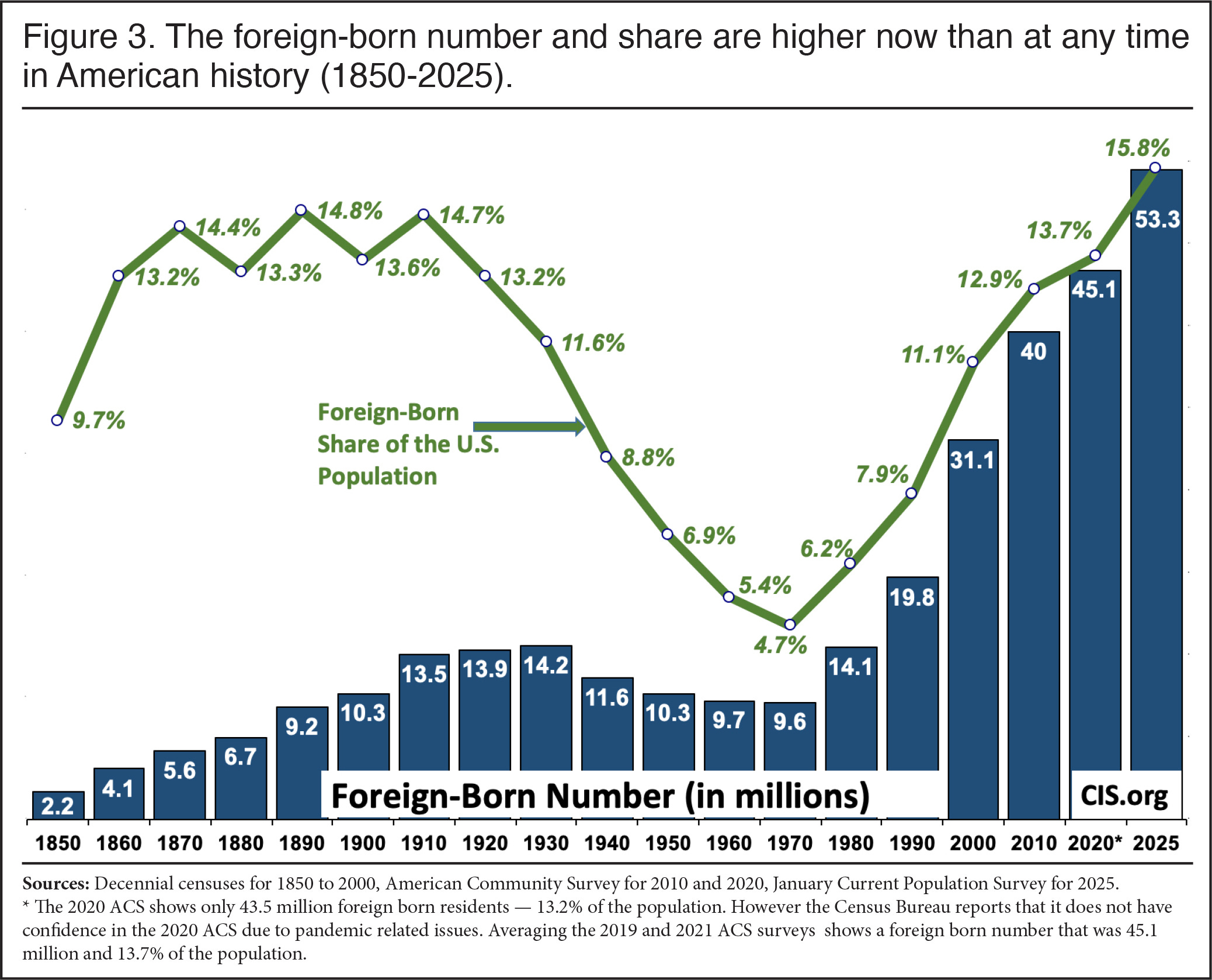
The results are unambiguous. Abramitzky et al. (2021) find that “In urban areas – and especially in manufacturing – the loss of immigrant labor was replaced on a nearly one-for-one basis by new inflows of internal migrants, as well as immigration from unrestricted countries” (p. 13).6
Slicing the Pie
At this point, someone usually clears their throat and says “the fixed pie fallacy”. Jobs aren’t fixed, the argument goes, because new workers create new demand (though standard economic theory would predict diminishing returns to labor if capital and land are held constant). But when immigration pushes natives out of high-opportunity places, the losses don’t magically disappear. In fact, this crowd-out effect causes economic displacement that persists even in the long run. And there’s evidence this displacement sticks.
The first evidence comes from a study by Kim & Sakamoto (2013), which critiqued the spatial approach of measuring the relationship between immigrants and native wages. The spatial approach doesn’t take into account the fact that immigrants don’t just move to anywhere for jobs, they will make decisions on where to move to based on the economic opportunities of local areas. Or, to put it more simply, immigrants don’t pick random areas to move to; they pick nice areas, which is why this approach tends not to find significantly negative effects of immigration on wages. Using the spatial approach, one would end up getting a positive correlation between the share of immigrants and wages:

However, if one employs the occupational approach (i.e., comparing wage changes within the same occupations), then this positive correlation disappears:
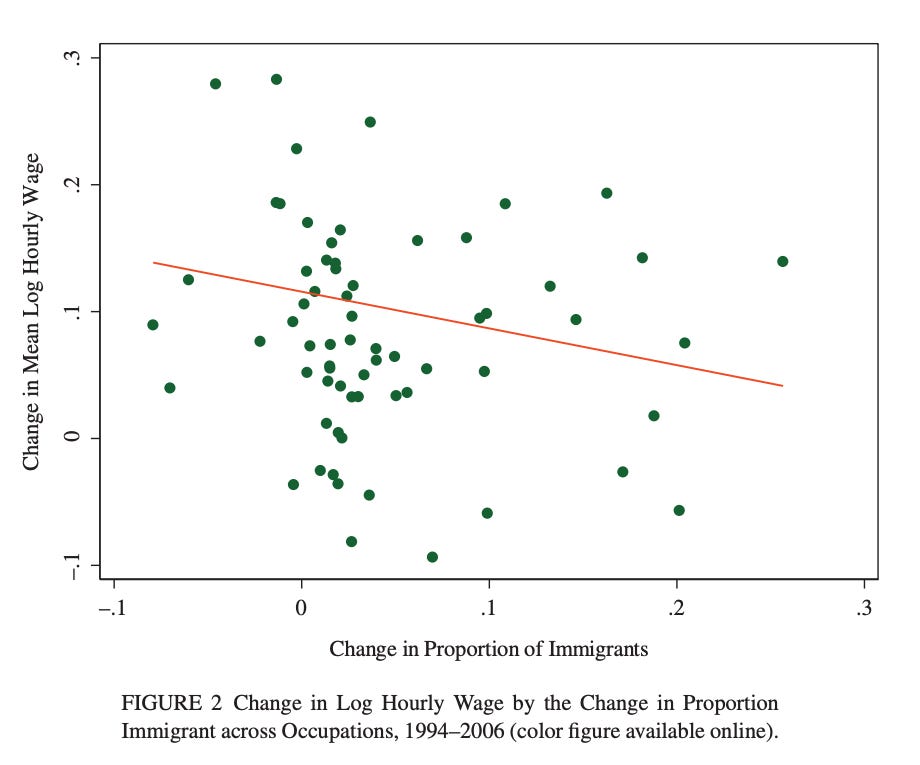
Using the latter approach produces results that are clearly negative (see Table 3). In the initial analysis, the authors relied on three-digit occupational categories, but the problem with using such narrow groupings is that they fail to account for natives who switch jobs to avoid economic competition, which will result in an underestimation of the true effect. To mitigate this, the authors expanded their analysis to broader two-digit and one-digit occupations for the 1994–2006 period. The results from the occupational approach are presented on the right side under the column “Occupation-Level”, and we can see that the negative effect persisted.

So what about the role of internal migration? Price et al. (2023) explored what happened to native “movers” and “stayers” when immigrants moved in. After controlling for natives that were displaced as well as selective in-migration, the stayers did not see an income gain. But this masks the heterogeneous effects immigrants had on workers of different ages. In reality, the biggest losers were young workers, who were the most hurt by immigration. After tracking them from 1910 to 1940 through the Census, the authors found that these workers suffered a persistent income loss, and among the ones that were displaced, their losses were twice as large as non-movers (roughly 8% vs. 4%, respectively).
There’s also another wrinkle the “fixed pie” line ignores: bargaining power. If firms have monopsony power, immigration gives them leverage, resulting in much slower wage adjustments than is traditionally assumed. Amior & Manning (2024) considered this possibility, finding evidence in support of persistent displacement:
Based on our estimates, the expansion of native mark-downs (in response to migration) dominates the aggregate gains in marginal products. As a result, the average native wage declines, even in a “long run” setting with elastic capital. Though aggregate native income grows (due to the transfer of migrants’ rents), more than 100% of these gains go to profits, as the increased mark-downs redistribute income from workers to firms” (p. 39).
So no, the pie isn’t literally fixed. But if adjustment is slow enough and if natives are forced away from opportunity, that distinction doesn’t do much for the people who lose out.
In short, actually-existing immigration drives locals away, and in the place where this effect is measured best (the United States), it is large enough to fully explain otherwise-puzzling changes in internal migration since 1970. Since immigration to the other countries on the list tends to be less selective, and space is more at a premium (even in Canada), we can reasonably assume the same applies to them.
Mechanisms of Displacement
If immigration displaces local natives, it must operate through some identifiable mechanism. The following two sections explores two of the largest mechanisms responsible for pushing natives away.
Overpopulation and Housing
Housing is an obvious candidate. Population growth in supply-constrained cities raises rents, pricing out marginal residents. In the case of the United States, it’s been found that a 1% increase in immigration results in increasing rent prices by 1% (Saiz, 2007). Absent immigration, housing costs in productive regions would still rise, but more of the people paying those costs would be natives, while prices elsewhere would fall.
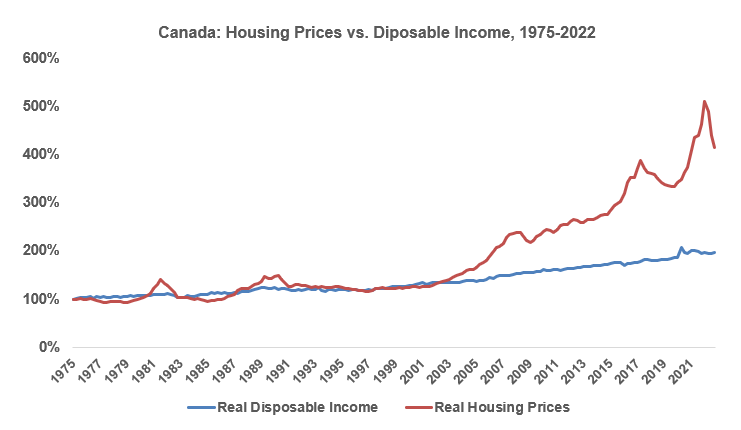
Some of this pressure can be mitigated through permitting reform and infrastructure expansion. But there are hard spatial constraints on housing and transportation in dense urban cores, constraints that only the highest of technocratic optimism can wish away. Even if supply reforms were implemented perfectly (and they never are), the same reforms would alleviate overcrowding far more in a low-immigration counterfactual.78
More fundamentally, as Borjas & Edo (2022, p. 22) put it, “native internal migration diffuses the impact of immigration from the affected local labor markets to the national economy”. The same logic applies to housing markets. Studies claiming minimal effects of immigration on wages or rents typically measure local outcomes while ignoring the fact that internal migration spreads these effects across the entire country. Once this diffusion is properly accounted for, the expected supply-and-demand effects reassert themselves: downward pressure on wages and upward pressure on housing prices (Monras, 2021).
But this explanation is insufficient. The magnitude of native outmigration in response to the arrival of immigrants is often much larger than what can be explained by housing costs alone. Mussa et al. (2017), for instance, finds that while a 1% increase in immigration in a metropolitan statistical area (MSA) increases rent prices by 0.8%, when looking at neighboring MSAs, the effect was double—1.6%. For housing prices, a 1% increase in immigration raises housing prices by about 0.8% within the target metropolitan area, but prices rise by 9.6% in surrounding MSAs. In some cases, immigration even lowers local housing prices (Sá, 2015),9 implying an extremely outsized native response.
Such large spillover effects are difficult to reconcile with a simple demand story. This implies that more natives are leaving productive areas than would be predicted by housing pressure or congestion alone. Something else is at work. That something is immigrant behavior.
Social Friction
Large inflows of culturally distant, low-trust populations often degrade local living conditions in ways that are not well captured by standard economic models. Crime is the most obvious channel, but far from the only one. Political conflict, incompatible norms, misuse of public space, noise, litter, and simple dissatisfaction with becoming a minority in one’s own neighborhood all contribute to native exit. In the United States this process is often mislabeled as “white flight”, but it is neither exclusively white nor uniquely American.10
Nor does it require high crime. Even affluent, low-crime immigrant groups can induce native outmigration by transforming institutions. West Coast Asians, for example, have dramatically intensified educational competition, raising the grind associated with schooling and driving native flight from public school districts (Boustan et al., 2023).11 The outsized native outflow is a response to these behavioral externalities.
Unlike housing costs, this mechanism is highly sensitive to the composition of immigration. Early 20th-century Ellis Island immigration did not produce anything resembling white flight. Native-born Americans did not abandon New York, Boston, or Chicago en masse despite dramatic demographic change. By contrast, contemporary California, London, and New York City have seen absolute declines in native populations. The greater the cultural, behavioral, and normative distance between newcomers and locals, the stronger the incentive for natives to leave.
The standard optimist’s reply to this is simple: “give it time”. Any tension we see now is just a “phase”. As people intermingle, they’ll get used to each other, fear will fade, and prejudice12 will melt away through everyday contact. This idea sits at the heart of a large chunk of the social sciences, but the empirical support itself is far more lacking.
One frequently cited study is Stolle et al. (2008) which reported that interracial contact partially mediated the negative relationship between racial diversity and social trust. But this result failed to replicate in the European Social Survey, and the original finding was likely an artifact of common method bias from using the same survey to measure contact and trust (Dinesen et al. 2015).
More recent work points in the same direction. Leeuwan et al. (2023) conducted four studies examining whether exposure to immigrants attenuates the relationship between disgust sensitivity and opposition to immigration. It does not. Exposure had no meaningful mediating effect. Another study found that in Europe, “direct exposure to refugee arrivals induces sizable and lasting increases in natives’ hostility toward refugees, immigrants, and Muslim minorities; support for restrictive asylum and immigration policies; and political engagement to effect such exclusionary policies” (Hangartner et al., 2018).
History offers little solace. During the Second Great Migration of American blacks from 1940 to 1970, Boustan (2017), examining 70 U.S. metropolitan areas, found that for every black family moving into a central city, roughly two white families moved out. And the long-run attitudinal effects persist to this day. As Vuletich et al. (2023) show, counties that received larger black inflows historically exhibit higher implicit racial bias among white residents today.
Zooming out, the broader literature provides no firm foundation for the contact hypothesis. A meta-analysis by Dinesen et al. (2020) finds no statistically significant mediating effect of interethnic contact on the relationship between diversity and trust. Paluck et al. (2019), explicitly evaluating the contact hypothesis, report that once publication bias is corrected for, contact may actually increase prejudice, though the estimate is not statistically significant.
The most optimistic evidence comes from a recent meta-analysis of forty-one preregistered experiments. Lowe (2025) finds that intergroup contact does, on average, reduce prejudice. But the magnitude is vanishingly small (about one tenth of a standard deviation). More importantly, the effect operates predominantly at the interpersonal level. Contact changes how people behave toward the specific individuals they have interacted with, less so how they perceive the outgroup as a whole.
Winners and Losers
In nearly every wealthy country, locals are more skilled than immigrants. When skilled natives are driven out of high-productivity regions by overcrowding and poor behaviors of unskilled (and often economically inactive) immigrants, the national economy suffers. Labor is misallocated away from places where it generates the most value, and aggregate productivity falls below the counterfactual.1314

The costs are not merely macroeconomic. Internal migration has historically been one of the primary engines of upward mobility. The canonical story of “ambitious country kid moves to the big city to better himself” has largely disappeared in high-immigration Western countries. That pathway has been appropriated by immigrants themselves. The beneficiaries of urban productivity are no longer natives seeking opportunity, but newcomers displacing them.15
Distorting the Immigration Debate
This internal displacement has another effect: it systematically biases the immigration debate in favor of immigration advocates. Much of the literature evaluates immigration by comparing immigrant incomes or fiscal contributions to those of natives. This is how one arrives at figures like the following:
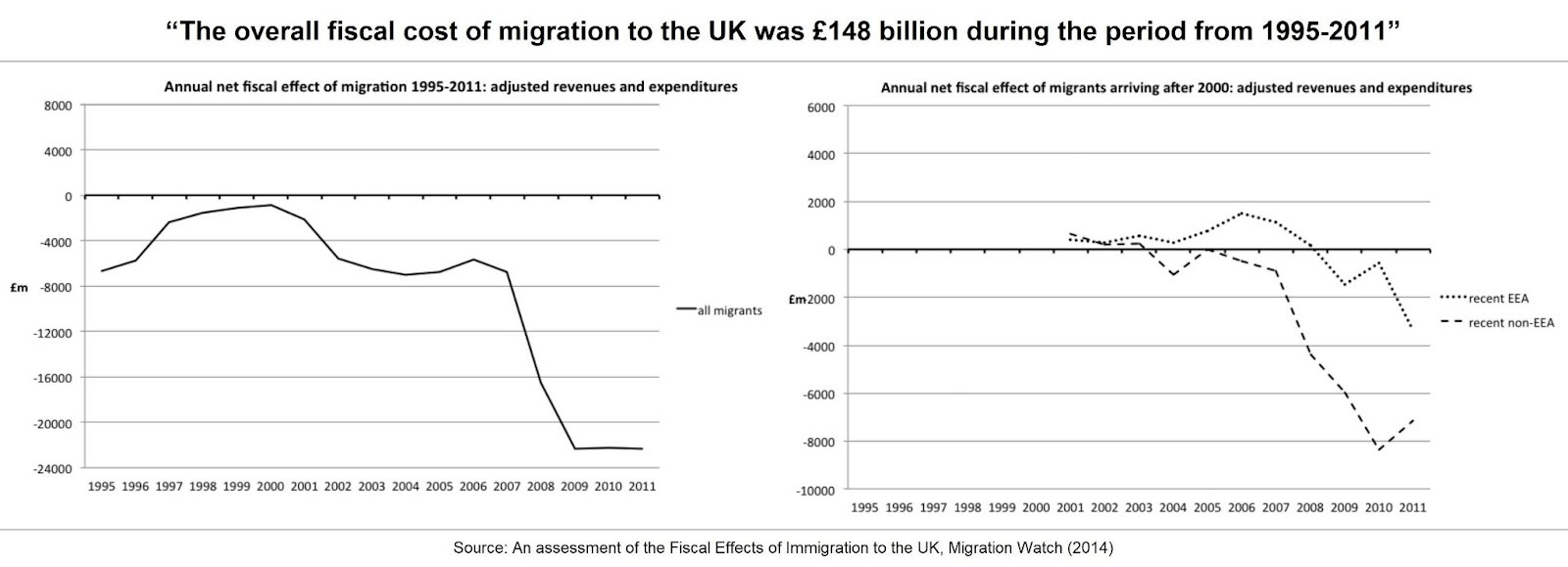

But because immigrants cluster in high-productivity areas,16 and because their presence drives natives out, immigrant incomes are artificially inflated relative to natives.17 In Britain, ethnic minorities are overrepresented in London by roughly a factor of three. London’s productivity is about 50% higher than the rest of the country. Were it not for immigration-induced native displacement, white British incomes would be higher and minority incomes lower than observed. Fiscal and income comparisons therefore substantially understate the true cost of immigration relative to natives.
Revealed Preference as a Market Test
The pattern of internal migration is also evidence against one of the more sophisticated arguments for mass immigration, which goes something like this: even if immigrants raise the cost of housing, compete with native workers, and strain the welfare system,18 they provide large economic benefits through indirect channels. Specifically, they free up skilled natives to focus on more complex work, boosting economic growth through specialization of labor. In other words, the supposed new opportunities that migrants open up for natives more than compensates for any negative direct costs over a lifetime. It is an argument often made by people like Bryan Caplan. Below is a thought experiment he presents to support this:
Suppose we have an isolated society in which everyone is a genius. Let’s call them the Brains. Who takes out the garbage? A Brain, obviously. Who does the farming? Again, Brains.
Now what happens if the geniuses come into contact with a society where everyone is of average intelligence at best? Let’s call them the Brawns. If the Brains allow the Brawns to join their society, the average genetic quality of the Brains’ society plummets. But everyone is better off as a result! Now the Brains can specialize in jobs that require high intelligence, and the Brawns can take over the menial labor. Total production goes up.
According to this model, even if low-skilled immigration reduces GDP per capita, no one is made worse off because the effect is solely compositional (i.e., adding poorer individuals). In fact, everyone is made better off because of large allocative benefits of labor specialization which results in an increase in living standards.19
While this argument is possible in theory, the actual behavior of natives suggests that this is not the case in practice. If it were, domestic migration should flow towards concentrations of immigrants,20 not away. In fact, this would be the case even if the average effect of immigrants on living standards was null, because the same economic factors that draw international migrants would also draw internal migrants. Instead, what we consistently see is that when immigrants move in, natives leave.
You’d also expect to see a very different trend in international migration, if the argument was true. Skilled workers from the First World would move to the Third World to take advantage of the allocative benefits of low-skill labor and because “higher IQ would be in greater demand”. Someone who might be a cashier in the U.S. could move to Brazil and enter the upper-middle class. Westerners would take advantage of the relatively greater IQ premium by moving to South Asia or Sub-Saharan Africa en masse. But instead, the unambiguous pattern we see is that of Third World elites moving to the First World.
The reason for this is because more intelligent populations generate large, compounding externalities that operate well beyond individual earnings. Higher cognitive ability improves competence in complex roles, facilitates innovation, enables large-scale cooperation, and raises economic literacy,21 all of which scale socially rather than merely individually. The result is that the effect of national IQ on national income is several times larger than the effect of individual IQ on individual income (each IQ point is associated with a 2–3% increase in individual income versus a 6–8% increase in GDP per capita). In other words, high intelligence has large positive externalities and low intelligence large negative externalities.
National IQ is positively correlated with almost everything good and negatively correlated with almost everything bad. We therefore shouldn’t be surprised that it’s the single best predictor of GDP per capita, and conditional on GDP per capita, future economic growth. It is also an excellent predictor of socioeconomic development.
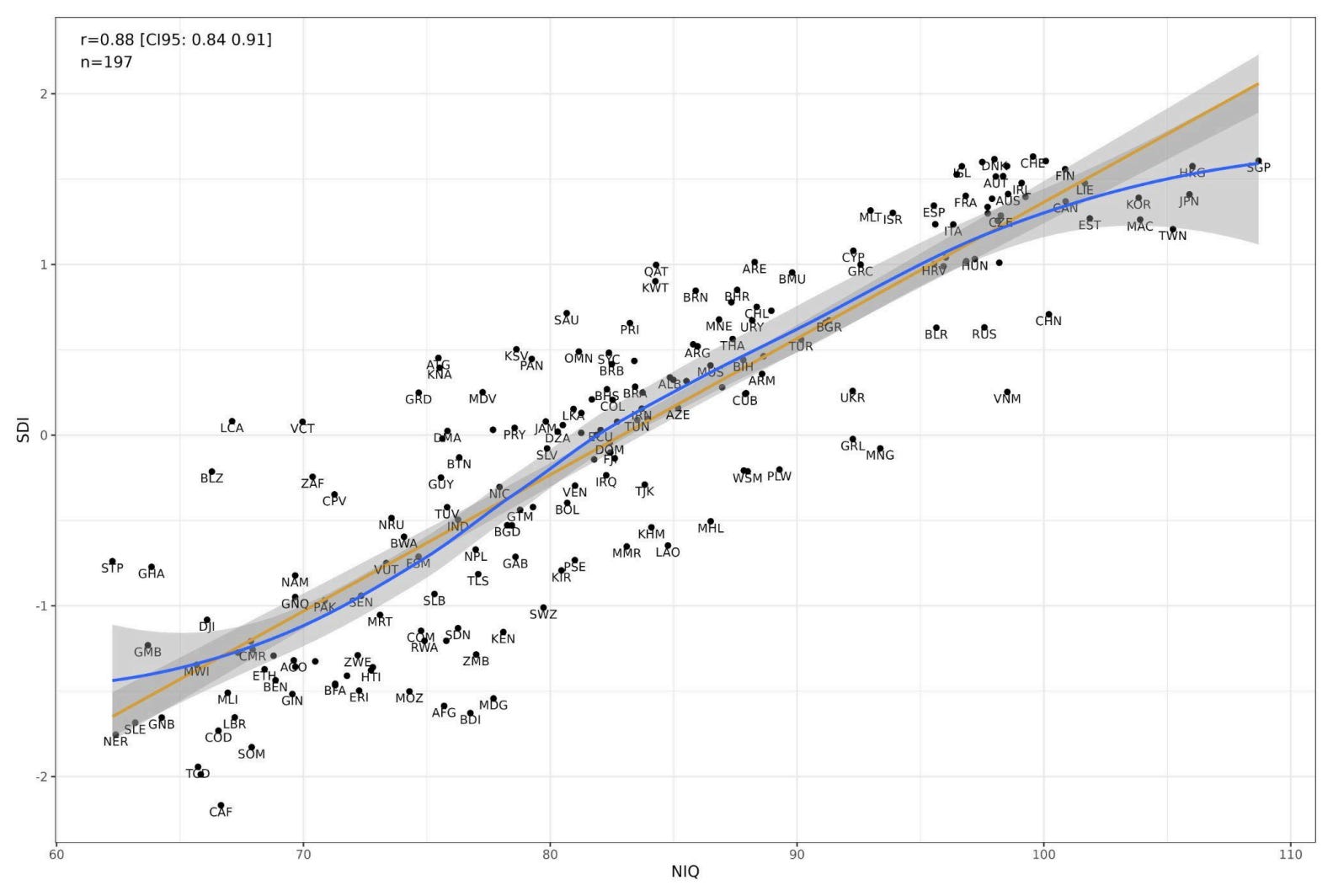
In societies created by individuals with high IQs, everyone benefits. This is why immigrants who move from low-income, low-productivity countries to wealthy, Western countries see gains in their wages (Hendricks & Schoellman, 2017). This wage gain at migration represents the economic benefit migrants get from moving to a high-IQ society, which is able to make better use of their human capital.
Insofar as low-skilled immigrants lower the national IQ of the host society, they generate negative externalities for natives. Any indirect benefits they may provide is offset by these negative externalities. If moving to a high-IQ country raises one’s living standards independently of one’s own ability, the reverse should also be true—that the same person living in a country with a lower IQ should have lower living standards.
With that in mind, immigration lowers national IQ in every Western country except Australia.
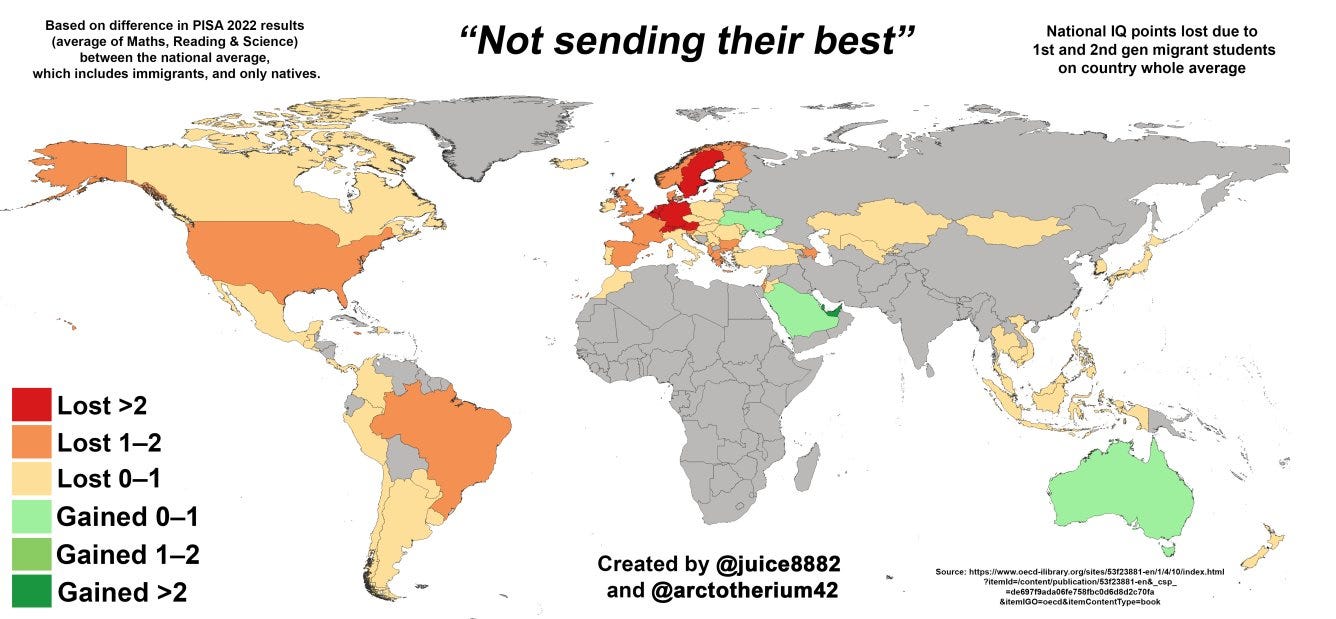
Economic activity doesn’t take place in a vacuum, and indirect effects go both ways. Actual human behavior suggests that the costs of lower average IQ greatly outweigh the benefits.
Conclusion
Immigration has too many effects on locals to measure all of them cleanly, let alone weigh them appropriately. But there is a simpler way to evaluate what is happening: watch what people do. If immigration were broadly beneficial to natives, we would expect them to move toward it—to follow the opportunity it allegedly creates. If it is harmful, we would expect the opposite. And what we observe is not subtle.
Revealed preference indicates that Westerners dislike actually-existing immigration so much that they are willing to pay a heavy price to escape it. In immigration-heavy countries, people move away from economic opportunity. They leave the very places where their skills would be most valuable and their incomes highest. That is not how a healthy system behaves. It is how a system behaves when something has gone wrong at a more fundamental level. It is easy to talk about “flexible labor markets” and “long-run adjustment” in the aggregate and in theory. It is much harder to explain why, if those stories were true, natives would consistently choose to abandon the most productive regions of their own countries. People do not walk away from opportunity without a reason, and certainly not on this scale.
The consequences are anything but abstract. When natives are pushed out of high-productivity areas, labor is misallocated and national output suffers. The primary engine of upward mobility—moving to where opportunity is greatest—is weakened or destroyed. At the same time, the effects are systematically obscured, making immigration appear less harmful than it actually is. The debate itself becomes distorted, built on measurements that miss the most important margin of adjustment. Internal migration away from productive areas should be a glaring warning sign. It is the clearest signal available that something deeper is amiss, that the system is no longer working in the way it once did, and for the people it once did. At some point, that signal needs to be taken seriously.
One pattern is worth noting: immigration restrictionists who argue that immigration depresses wages tend to hold that position consistently. Immigration advocates, by contrast, usually deny such effects, except when it becomes useful to acknowledge them in support of a different argument.
This effect was so big that essentially all of the Soviet Union’s economic gains from 1917 to 1945 came from accelerating this shift from low-productivity countryside to high-productivity manufacturing; productivity within each sector barely budged.
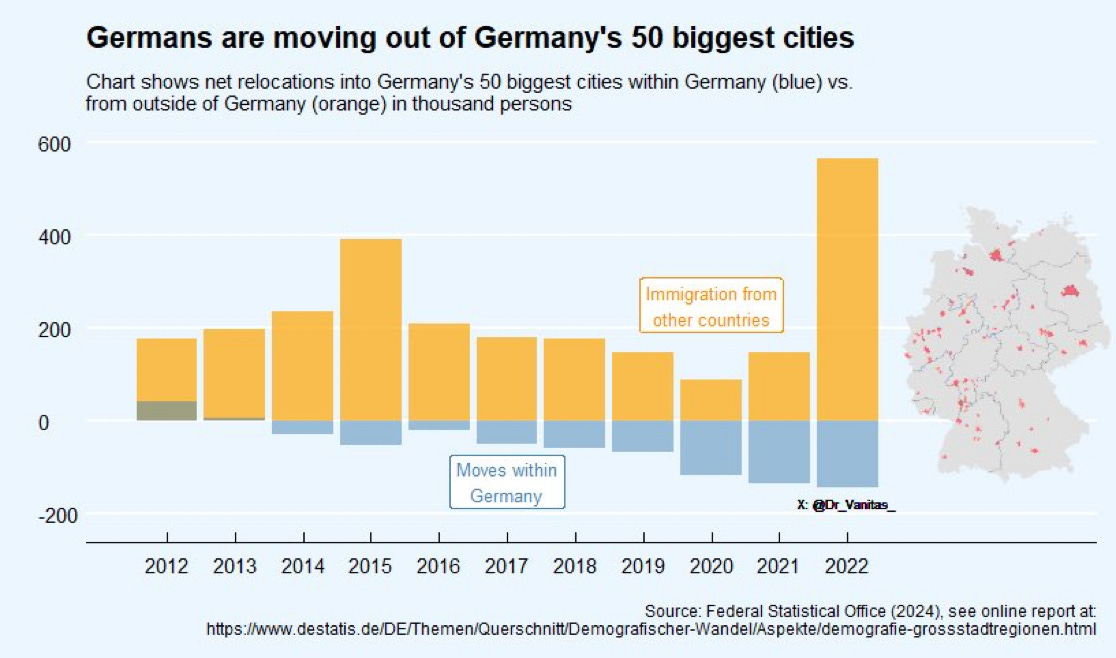
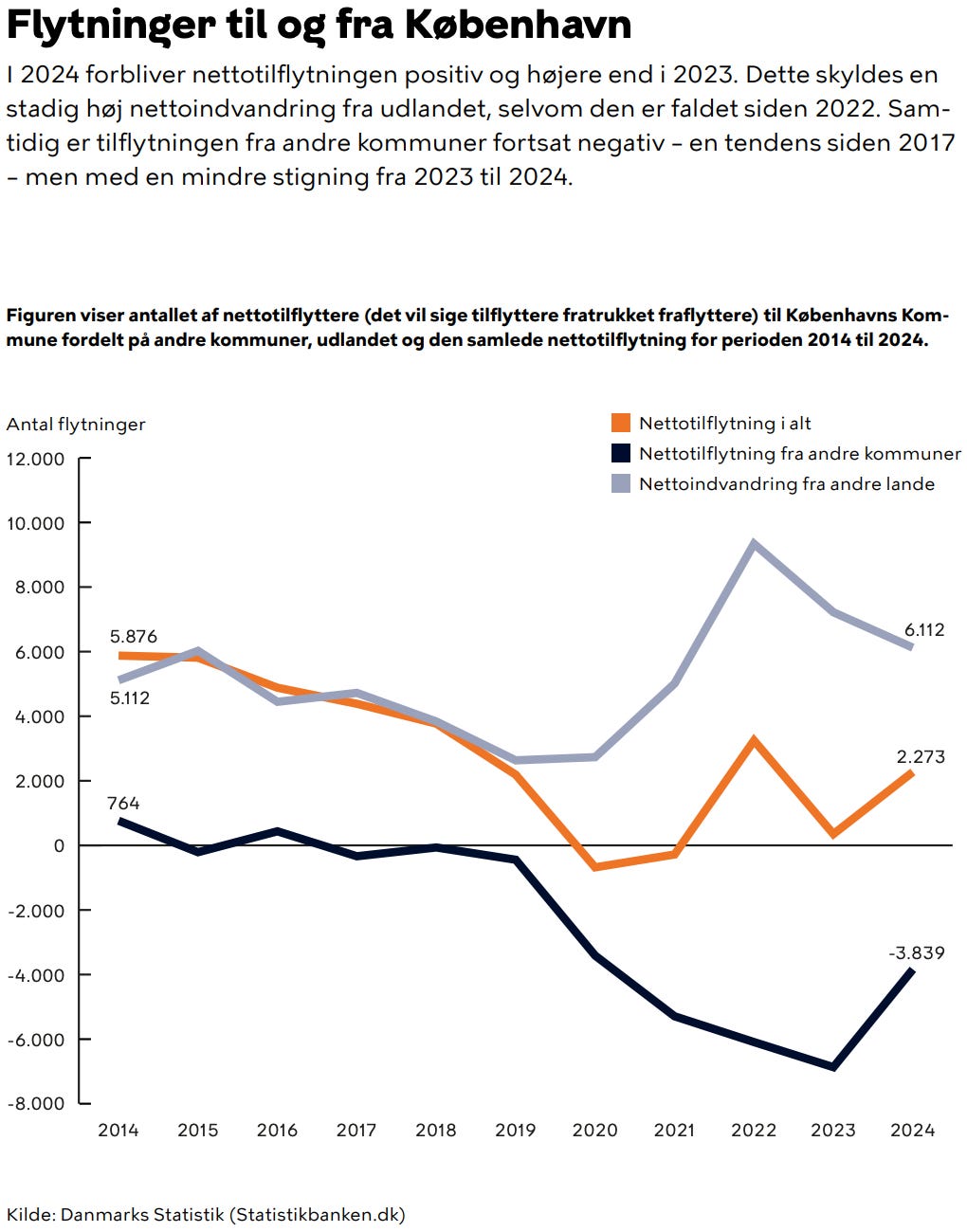
For some more visuals to illustrate this phenomenon, see all the examples below.
The United States [1] [2] [3] [4]:
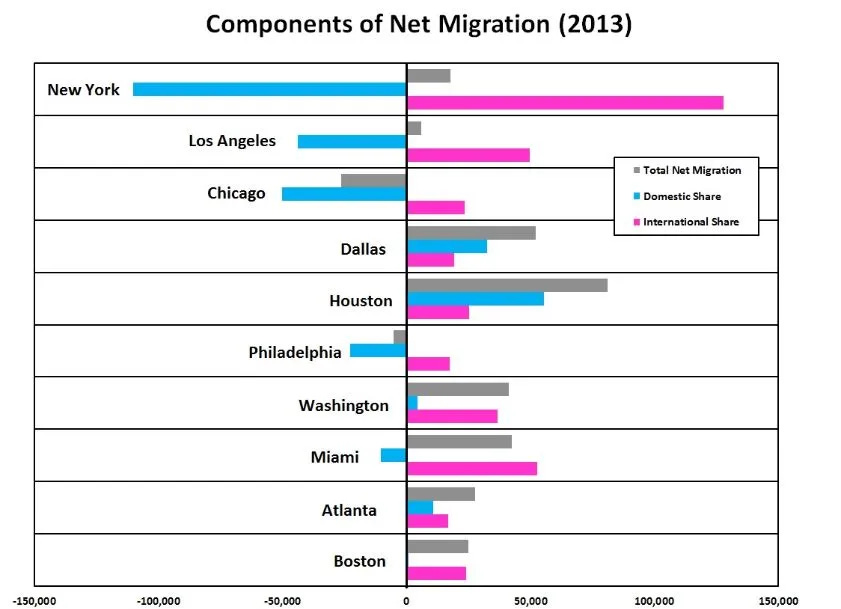
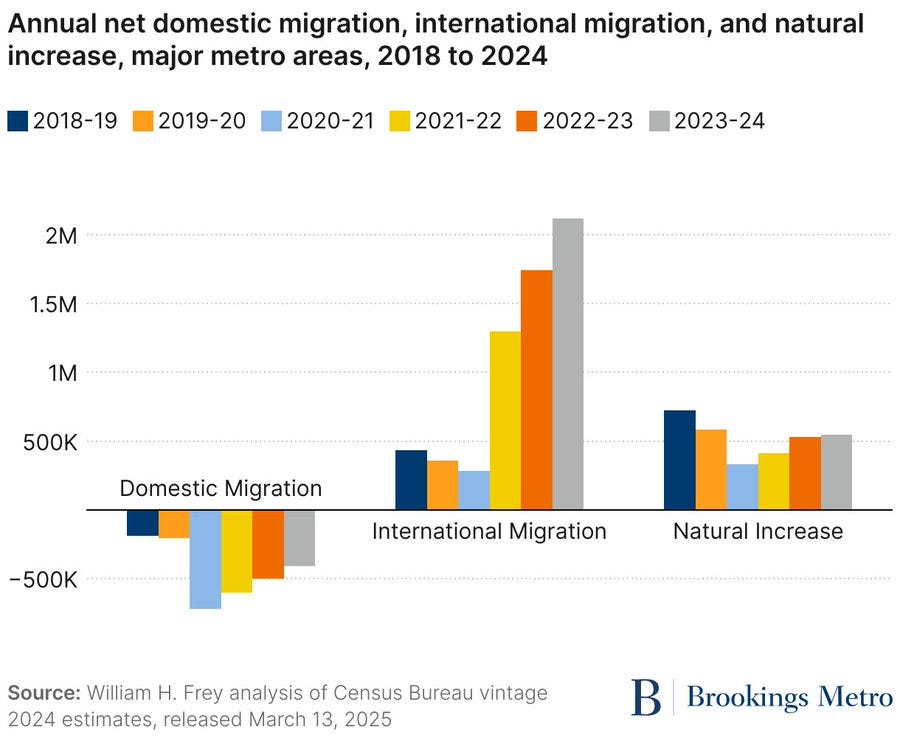
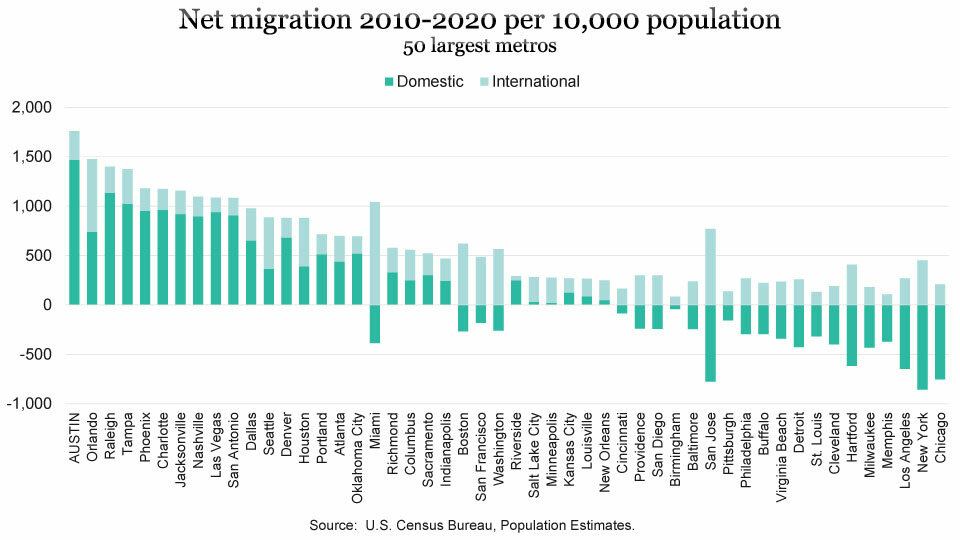
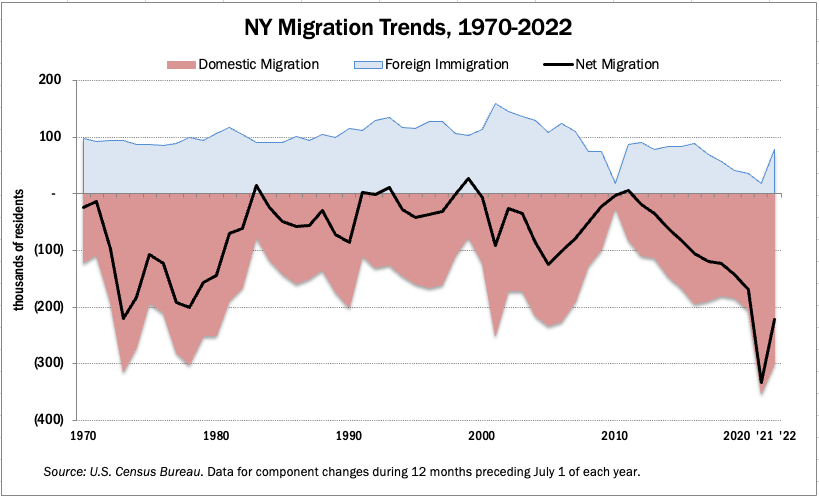
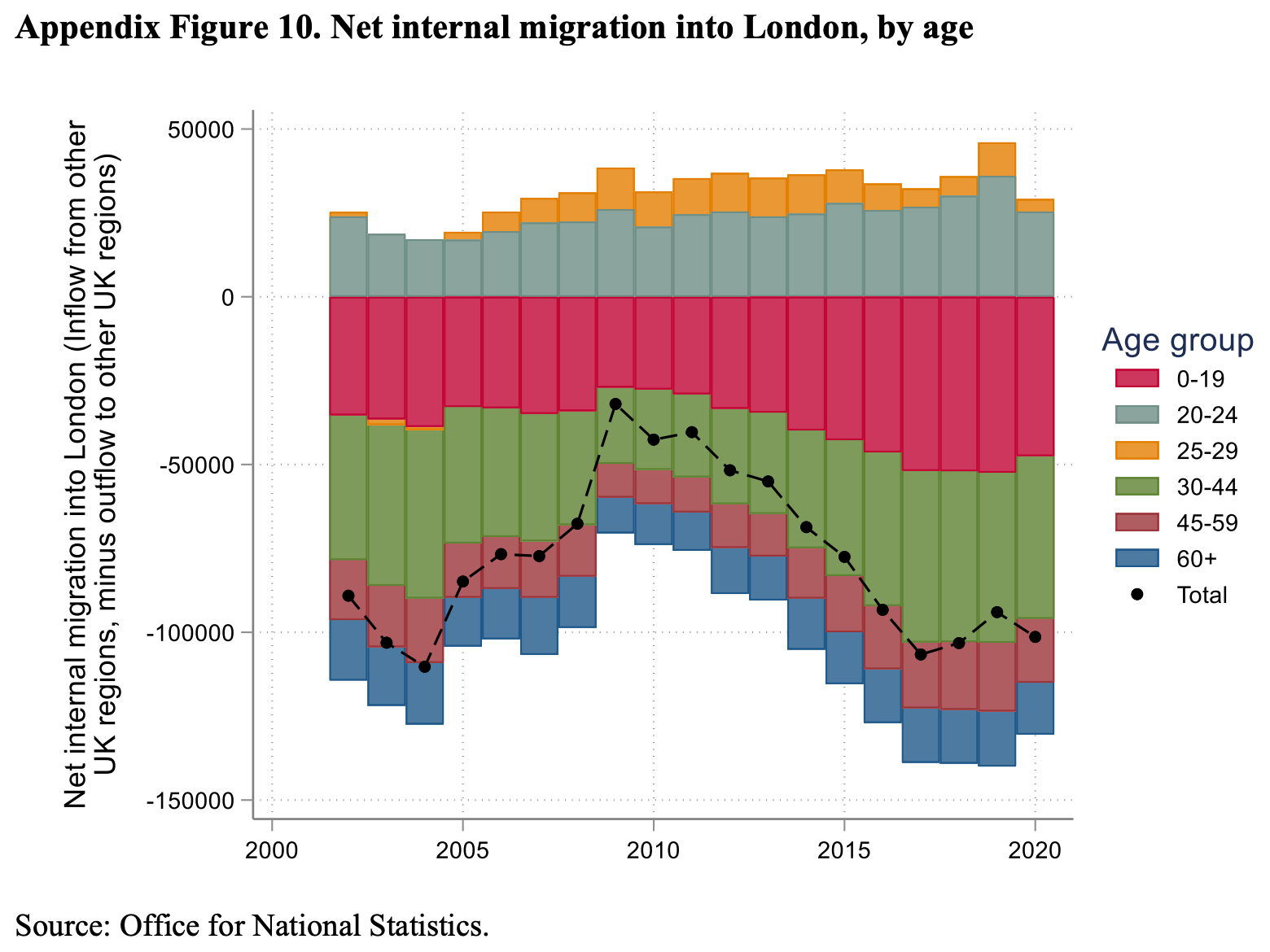
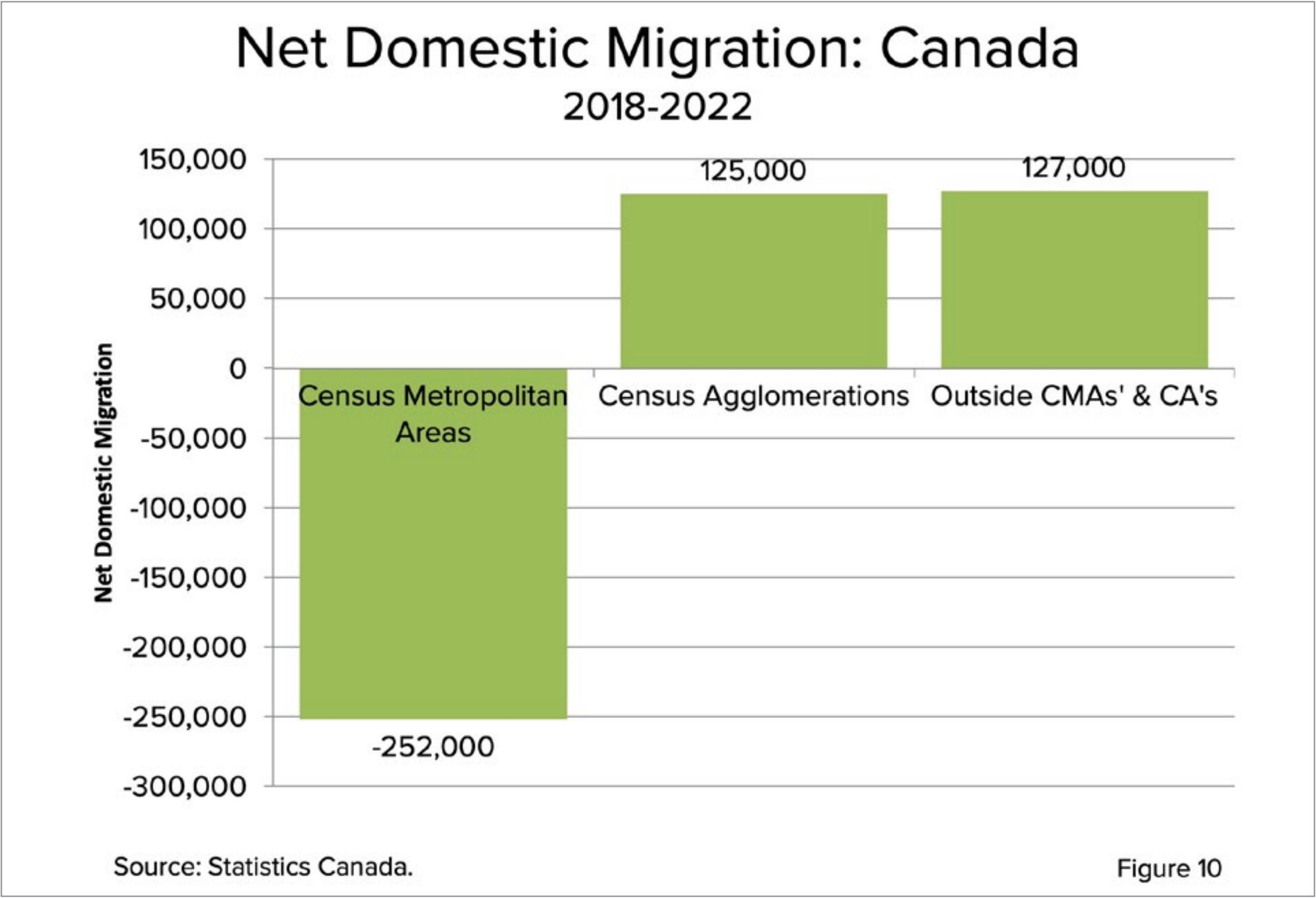
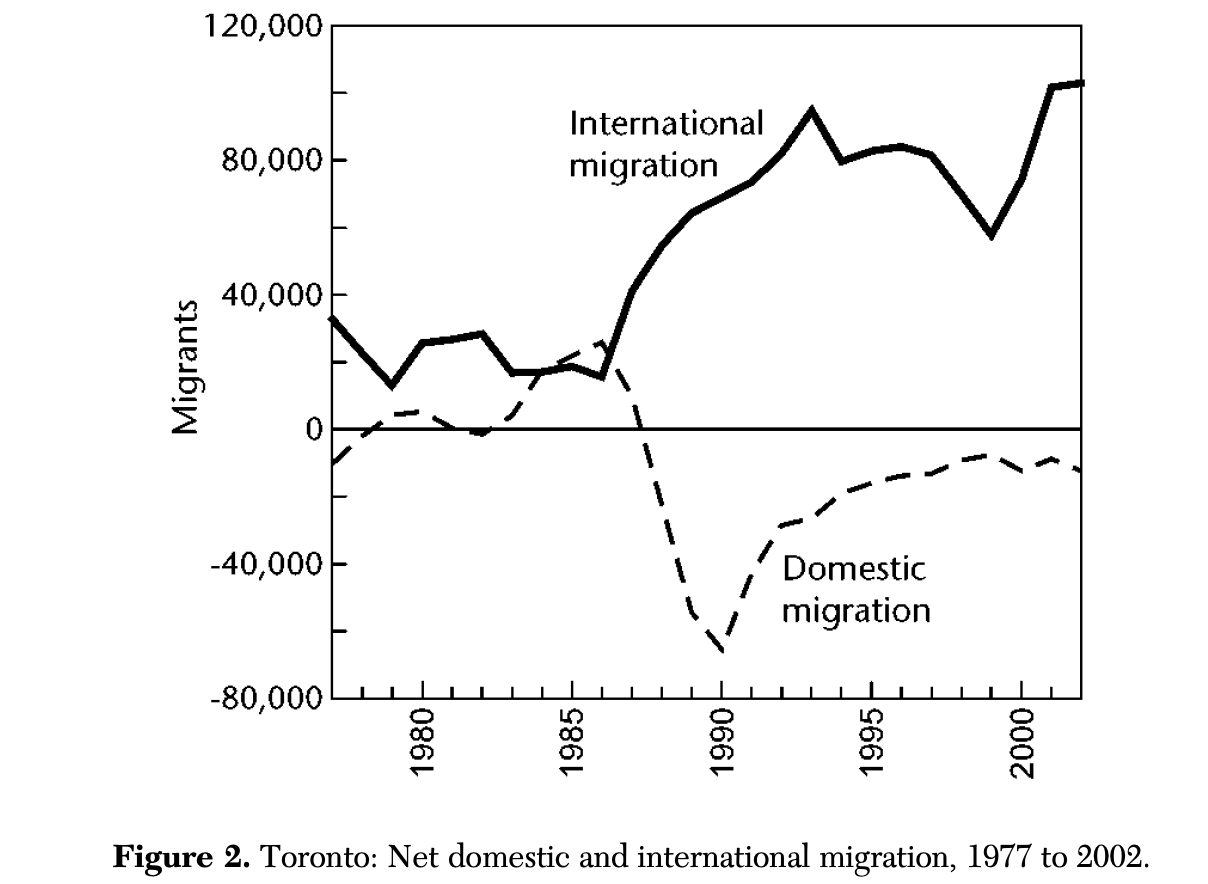
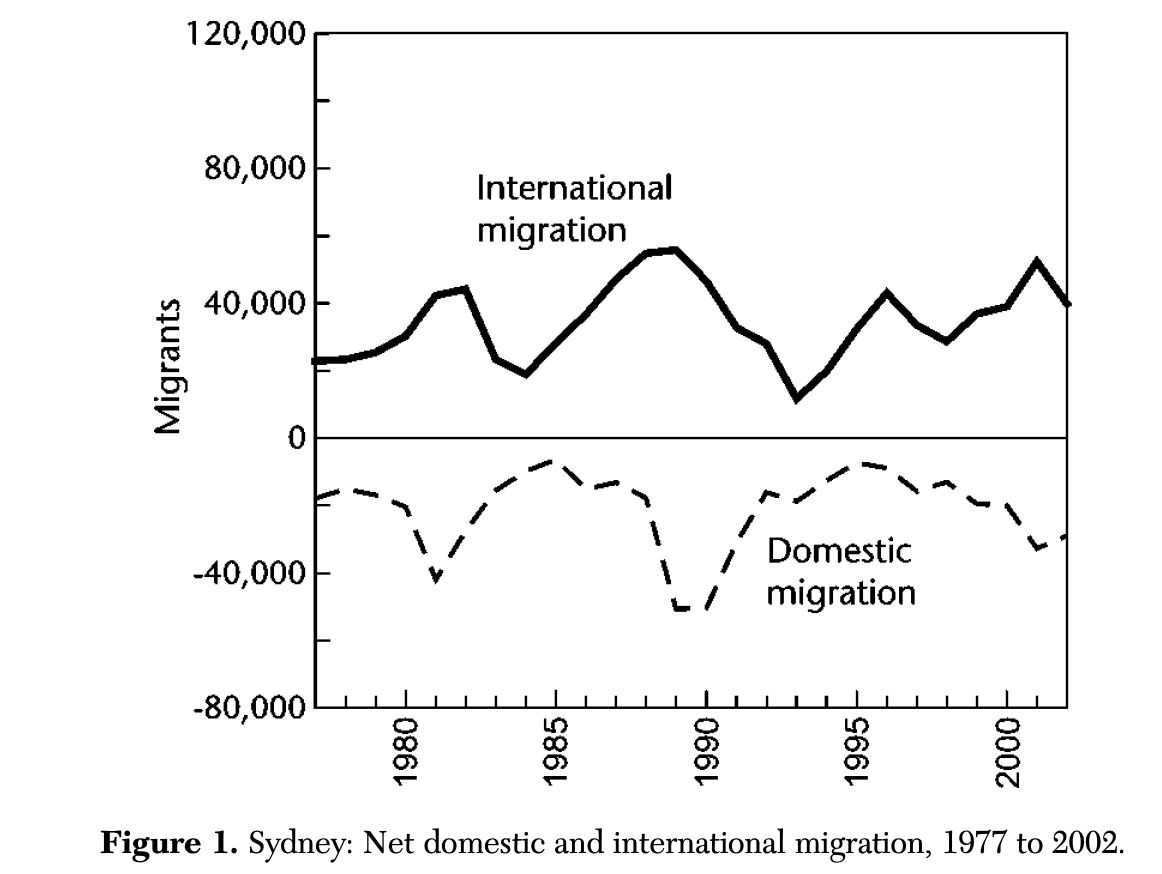
Germany (visual made by the now deleted X/Twitter account @Dr_Vanitas):
In contrast to all these examples, Japan exhibits the traditional pattern of domestic migration towards economic opportunity (note that the outflow from the 60s–90s was due to suburbanization and automobiles, which then reversed in the 21st century service economy):
They also found parallel results for high-income immigration on high-income families, but the since vast majority of immigrants to Norway (and much of the Western world) has been low-income, the real-world effect is not distributed equally.
Didn’t have a good place to fit this in, but another study looking into the Mariel Boatlift is Anastasopoulos et al. (2021), which utilized a historical database of job listings known as the Help-Wanted Index and found that the event resulted in a sharp decline in low-skill job vacancies, though “recovery” (native workers whose prospects were hurt left, so this will create an illusion of recovery within Miami itself) did eventually occur once enough time passed.
In agriculture, the immigrants were instead replaced by capital (i.e., mechanization), which helped make American agriculture by far the most modern and productive in the world during World War II. A modern analogy to that would be automation. It’s highly plausible that dependence on cheap foreign labor produces similar disincentives against innovation. Mann & Pozzoli (2024) analyzed changes in the share of non-Western immigrants in the local workforce across Danish municipalities. Controlling for a large number of workforce and firm-related variables, they found that the share of non-Western immigrants was negatively correlated with robot adoptions.
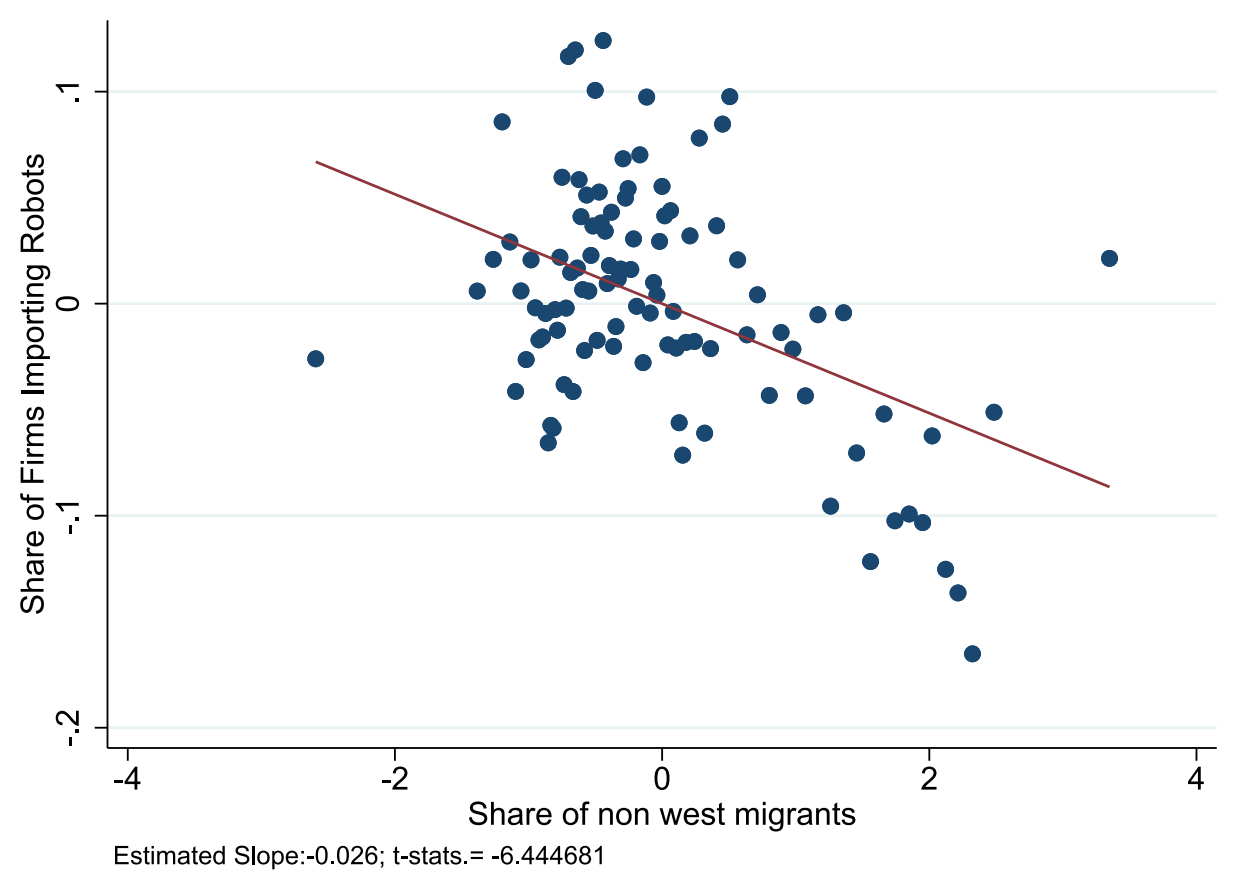
Specifically, they found that “a one percentage point increase in the share of non-Western migrants decreases the probability of robot adoption by 12%” which “supports the substitution hypothesis”.
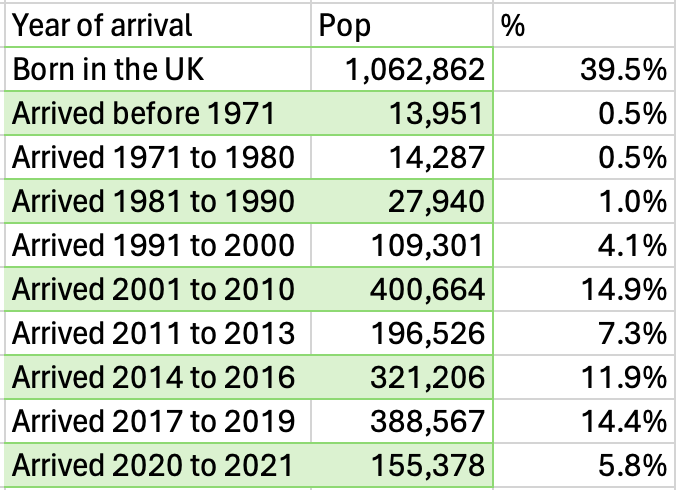
Take the United Kingdom as a case study. Many assume the skyrocketing cost of housing there is due to a lack of construction. In reality, construction has increased significantly, but it simply hasn’t been able to keep up with the rapid pace of immigration.
There are, of course, instances where the simple solution of “build lots of housing” is a reasonable solution to overcrowding. One can see this clearly when comparing various U.S. cities:
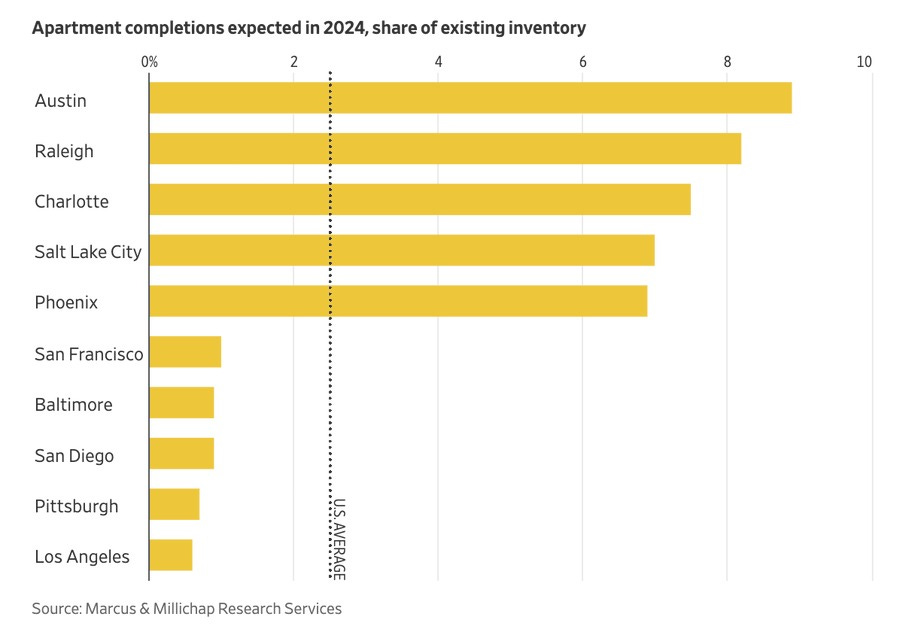
But this is dependent on pro-growth parties and coalitions (Republicans in the United States and right-wing parties in Europe) being in power, but immigrant voters in big urban areas tend to support anti-growth parties by huge margins and drive out the most pro-growth constituencies.
Those locals who leave don’t disappear, they move elsewhere, so national housing prices still increase.
It is also a surprisingly non-partisan response. White leftists are as likely to avoid moving into racially diverse areas and flee in response to sufficiently high levels of racial diversity as white conservatives in both the United States and the United Kingdom (Kaufmann, 2023a, 2023b). Actual real-world behavior is more honest than words.
And destructively. As education is mostly zero-sum signaling, Asians’ propensity to grind makes childhood worse for all Americans who aspire to middle-class status.
Never quite liked this word. Most negative attitudes toward various demographic groups develop after exposure, and should thus be referred to as “postjudice” instead.
In the Appendix of a study by Eric Kaufmann, neither education nor income were statistically significant predictors of moving away from racial diversity in the United States (Kaufmann, 2023a, Table A4). Racial diversity (which modern Third World immigration brings) is unpleasant for people regardless of socioeconomic status.
This effect is further exacerbated by existing systems that privilege nonwhites over whites in the job market, resulting in lower job performance from nonwhites compared to their white counterparts in the same occupations.
This would not be the case if it were the immigrants themselves that turned the cities they moved to into high-productivity areas. In theory, this isn’t impossible. German and Jewish immigrants in Eastern Europe and Huguenots in Germany both created new high-productivity centers. But in practice, all of the major high productivity centers attracting Third World immigration today were high productivity long before the current wave of immigrants showed up. New York, London, Paris, and Berlin have been economic centers for centuries, and even Silicon Valley, where high-productivity immigrants are incredibly thick on the ground, was already the world’s most important tech hub by 1970. As such, locals and immigrants are effectively competing for access to the same limited set of productivity centers created by locals long ago.
Partly because of path dependency—immigrants join previous enclaves, which happen to be concentrated in high-productivity areas—and partly because if you’re going to move to another country, you may as well go where your skills are most valuable.
As it just so happens, the fact that settlement patterns for past and current immigrants from the same country are highly correlated is yet another reason why many studies fail to properly capture immigrant effects on native economic outcomes. Commonly used shift-share instruments (a form of instrumental variables estimation) cannot disentangle the effect of the initial labor shock from longer-term adjustments from earlier waves of immigration, which leads to an underestimate of the negative effects (Jager et al., 2018).
Crucially, this point does not even require native workers to be more skilled than their immigrant counterparts. The mechanism is more basic than that. On a global scale, we already understand that the same individual becomes more productive simply by moving from a low-capital, low-productivity country to a high-capital, high-productivity one; first world countries can make full use of human capital. Likewise, wages increase from moving to a richer country. The same logic applies within countries. Holding skill constant, a worker’s economic prospects depend heavily on where they are able to live and work. An immigrant who settles in a high-productivity, high-opportunity city gains access to those advantages by default. A native worker who is crowded out does not.
Much of the welfare debate comes down to whether analyses should be conducted at the household level or the individual level. The reason households are preferable stems from the fact that there are, at least in theory, restrictions imposed on the ability of new arrivals to access welfare programs. Their children, who are legally natives, do not face such restrictions. Hence if immigrants are getting access to welfare programs via their children, individual level analyses will count this as an expense on the part of natives—even though this is completely wrong. Here’s Jason Richwine:
For an illustration, consider an illegal immigrant head of household who is not herself enrolled in Medicaid but who does enroll her U.S.-born children. The household-level approach correctly concludes that this is a case of an illegal immigrant accessing welfare. After all, a parent is legally obligated to provide medical care for her children. If she does not, and the taxpayers step in to do it for her, then the parent receives a financial benefit. By contrast, the individual-level approach would assign welfare strictly to the U.S.-born children in this example. It would see only native consumption of welfare, with the illegal immigrant mother treated as self-reliant. That view is divorced from reality.
When looking at nuclear family households, we can see that a large percentage of their welfare is being consumed by someone other than the household head. What’s more, this trend is more pronounced for illegal immigrant households than for legal ones, demonstrating how misleading the results from individual level analyses are:
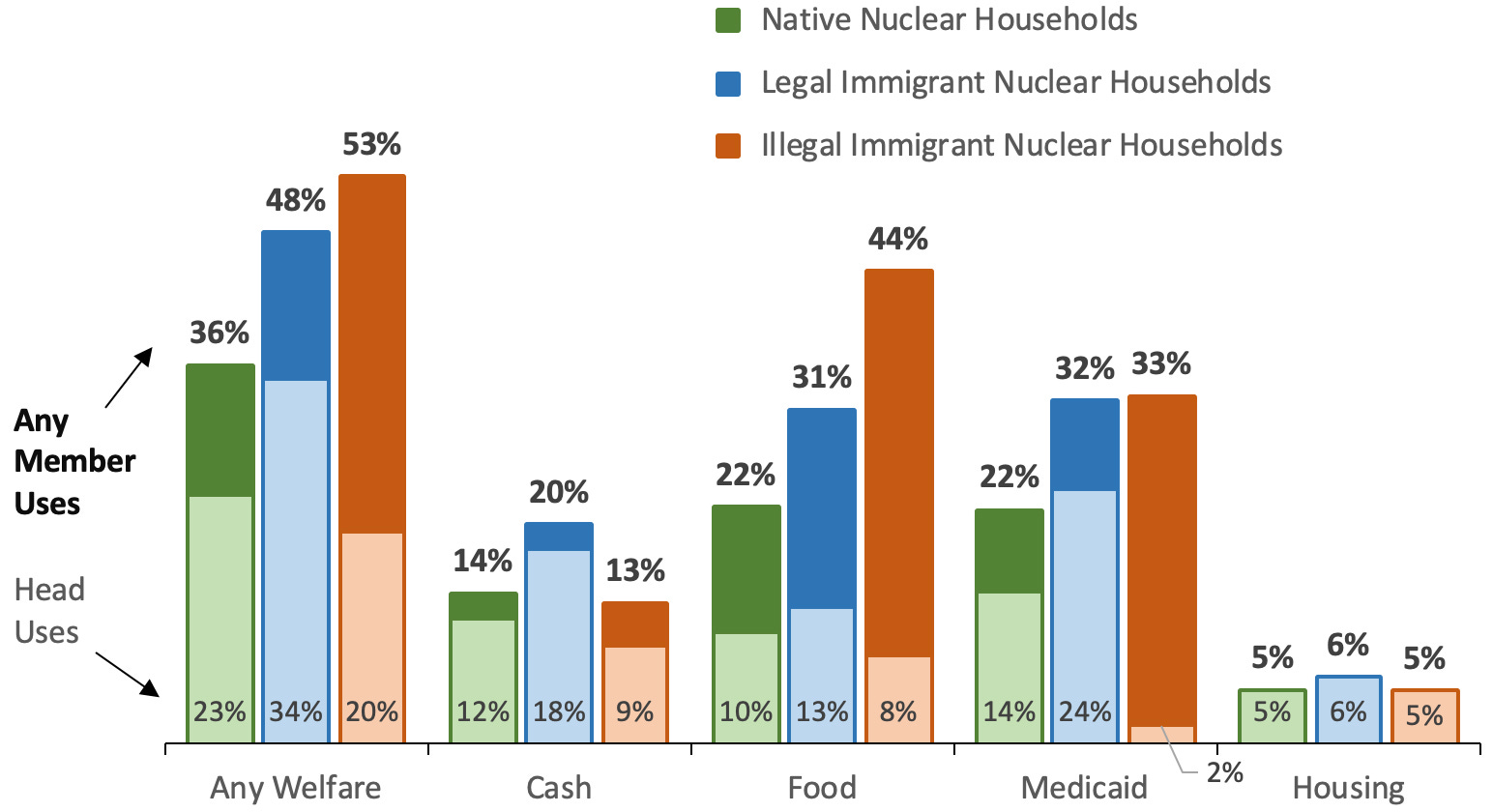
The fact that the children are legally natives is irrelevant because that’s just a function of existing laws in the United States. Calling the children “natives” doesn’t change the fact that they are an expense that only arose because their parents were allowed into the country in the first place (or entered illegally). They should obviously be placed in the immigrant category for a fair comparison.
A common objection to using household level analyses is that some households are of mixed nativity (i.e., the household head is an immigrant who is married to a native-born citizen). But, as the report from the Center for Immigration Studies shows, excluding these households leaves most of the welfare usage gap between immigrants and natives intact.
Living standards are much broader than GDP per capita or personal income, though they are highly correlated with them. Some things not captured by those two measures include physical safety, noise levels, infrastructure quality, and the language of local signs, all of which impact quality of life. Trying to enumerate, weigh, and precisely measure everything that goes into living standards is likely a fool’s errand, but you can look at people’s revealed preferences to see how they move.
Which has happened before historically, such as the case with Huguenot refugees in Germany.
Bryan Caplan and Garett Jones frequently criticize the American electorate for basic economic misconceptions—believing, for example, that housing supply raises prices or that public spending is costless—and attribute poor policy outcomes to this ignorance. Now consider a polity whose electorate averages ten IQ points lower. Call it “Bexico”. Suppose, further, that millions of “Bexicans” are enfranchised within the state of California. It requires no exotic assumptions to predict the result: systematically worse fiscal policy, heavier redistribution, weaker institutions, and declining state capacity. Voters are policy inputs, not neutral bystanders.
Another excellent post. On the last point, one of the more striking visuals is this map from Juice: https://x.com/juice8882/status/1952004458344300998/ note how inner London and Birmingham have seen a population collapse greater than economically disadvantaged areas like the South Yorkshire or South Wales coalfields, where few good jobs have been available since the 1980s.
Great research, but we need also interdisciplinary synergy,
about questions like:
Whom are we bombing, what to expect then? (check out what Iranians really are thinking)
Does not current historicistic and hypermoralic "atlantic" politics trigger the horrible memories in all the countries that were once colonized? India talks about the Britons (some media even utterng numbers like a 100M dead from the consequences of colonial wars and choking exploitation, and China talks about Opium wars & the century of humiliation, and there are dozens of very relevant countries joining the chorus, after looking at what the western elites currently are up to....
And last not least, aren't many of the snake oil preachers that talked Europe into this mess, weren't they notorious guests on Epstein's island?